



Petra, the ancient Nabataean city carved directly into vibrant rose-red sandstone cliffs, is not just Jordan's most treasured archaeological site — it's one of the most breathtaking places on Earth. Named one of the New Seven Wonders of the World and a UNESCO World Heritage Site, Petra attracts nearly one million visitors each year, and for good reason.
Whether you're a history enthusiast, an adventure seeker, or simply someone who appreciates raw natural beauty combined with human ingenuity, Petra delivers an experience that's impossible to replicate anywhere else in the world. In this comprehensive guide, we'll cover everything you need to know to plan an unforgettable visit.
Getting to Petra from Amman
Petra is located approximately 230 kilometers south of Amman, near the town of Wadi Musa. The journey takes around 3 to 3.5 hours by car via the Desert Highway (Route 15), or roughly 4 hours via the scenic King's Highway (Route 35), which passes through dramatic landscapes, crusader castles, and the stunning Wadi Mujib canyon.
Transportation Options
- Private Chauffeur (Recommended): Door-to-door comfort in a luxury sedan or SUV. Your driver waits while you explore, and you travel at your own pace. Seattle Limo offers this service starting from Amman, Queen Alia Airport, or the Dead Sea.
- JETT Bus: Daily buses depart from Amman's Abdali station at 6:30 AM. The journey takes about 3.5 hours.
- Rental Car: Provides flexibility but requires navigating unfamiliar roads and parking logistics at the site entrance.
Best Time to Visit Petra
The ideal months to visit Petra are March to May and September to November. During these periods, temperatures are pleasant (20–28°C), and the golden-hour light on the sandstone is at its most spectacular. Summer months (June–August) can reach 40°C, making extended hikes exhausting. Winter (December–February) brings cooler weather and occasional rain, but significantly fewer crowds.
Pro Tip
Arrive at the gate when it opens at 6:00 AM. The first hour inside the Siq (the narrow canyon entrance) is magical — no crowds, cool air, and the light filtering between the towering cliffs creates an otherworldly atmosphere. You'll also reach the Treasury before the large tour groups arrive.
Must-See Highlights Inside Petra
1. The Siq
The 1.2-kilometer narrow gorge that serves as Petra's main entrance is an experience in itself. Towering sandstone walls rise 80 meters on either side, with ancient Nabataean water channels still visible carved into the rock. As you walk deeper, the walls close in, building anticipation for your first glimpse of the Treasury.
2. The Treasury (Al-Khazneh)
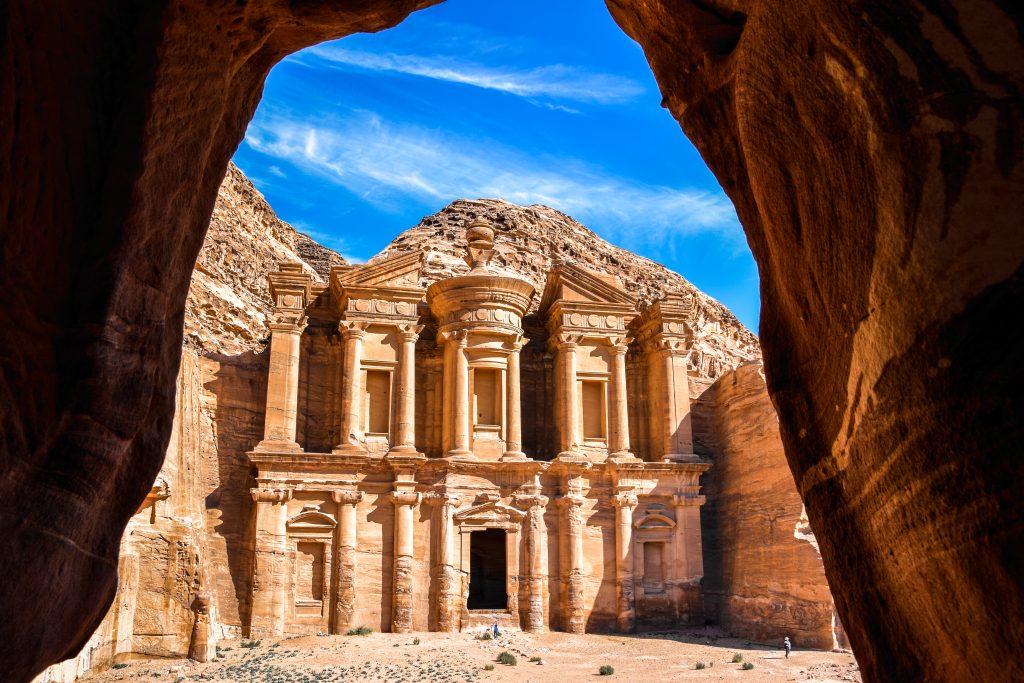
Nothing prepares you for the moment the Siq opens to reveal the 40-meter-tall facade of Al-Khazneh. Carved in the 1st century BC as a royal tomb, its Hellenistic columns and intricate sculptural details are remarkably well preserved. Spend time here — sit at the café opposite, watch the light change, and take in the scale of this masterpiece.
3. The Street of Facades
Continuing past the Treasury, you'll walk through a corridor of carved tomb facades in various architectural styles, illustrating the cultural diversity of the Nabataean trading empire.
4. The Royal Tombs
A massive cliff face on the eastern side of the central valley features several monumental tombs, including the Urn Tomb, the Silk Tomb, and the Corinthian Tomb. Climbing up to the Urn Tomb provides panoramic views of the entire valley below.
5. The Monastery (Ad-Deir)
If you only have energy for one major hike, make it this one. The 850-step climb to the Monastery takes about 45 minutes, but the reward is extraordinary — a 47-meter-wide facade even larger than the Treasury, set on a mountain plateau with sweeping views of Wadi Araba. Few places in the world match this combination of human achievement and natural grandeur.
6. The High Place of Sacrifice
An alternative hike that offers the best aerial views of the entire Petra valley. The climb is moderately challenging but well-marked, and the mountain-top altar platform is a fascinating glimpse into Nabataean religious practices.
Practical Information
- Entry Fee: Multi-day tickets are available. The Jordan Pass includes Petra entry and covers your Jordan visa fee — a significant saving. Check jordanpass.jo for current rates.
- Opening Hours: 6:00 AM – 6:00 PM (summer) / 6:00 AM – 4:00 PM (winter)
- What to Wear: Comfortable walking shoes with good grip are essential. The terrain is rocky and uneven. Bring a hat, sunscreen, and at least 2 liters of water.
- Photography: Early morning (6–8 AM) and late afternoon (3–5 PM) offer the best light for photography, especially at the Treasury.
- How Many Days: One full day covers the main highlights. Two days allows for deeper exploration, including the Monastery hike and lesser-known trails.
Petra by Night
On Monday, Wednesday, and Thursday evenings, Petra offers a magical candlelit experience called "Petra by Night." Starting at 8:30 PM, you walk through the Siq — illuminated by 1,500 candles — to reach the Treasury, where a Bedouin musical performance takes place under the stars. The experience lasts approximately two hours. Booking in advance is recommended, especially during peak season.
Where to Stay Near Petra
The town of Wadi Musa, which sits right at Petra's entrance gate, offers accommodation ranging from budget guesthouses to luxury five-star hotels. Top recommendations include:
- Mövenpick Resort Petra — Literally steps from the entrance. Old-world charm with modern comfort.
- Petra Marriott Hotel — Mountain-top location with panoramic views of the surrounding valleys.
- The Old Village Resort — Converted Ottoman-era village buildings creating a unique boutique atmosphere.
Seattle Limo Tip
Most of our guests combine Petra with other southern Jordan highlights. A popular multi-day itinerary is: Amman → Dead Sea → Petra → Wadi Rum → Aqaba. With a dedicated Seattle Limo chauffeur, this journey becomes seamless — no navigation stress, no rental car logistics, just pure enjoyment. Book your Petra transfer.
Common Mistakes to Avoid
- Only visiting for half a day: Petra requires at least 6–8 hours for the main highlights. A half-day visit means missing the Monastery and the Royal Tombs.
- Not bringing enough water: There are very limited shops inside the site. Carry at least 2 liters per person, more in summer.
- Skipping the Monastery: Many visitors turn back after the Treasury. The Monastery is equally impressive, if not more so.
- Visiting only the main trail: Ask your guide about the back trails — routes like the Wadi Farasa trail offer stunning views with virtually no crowds.